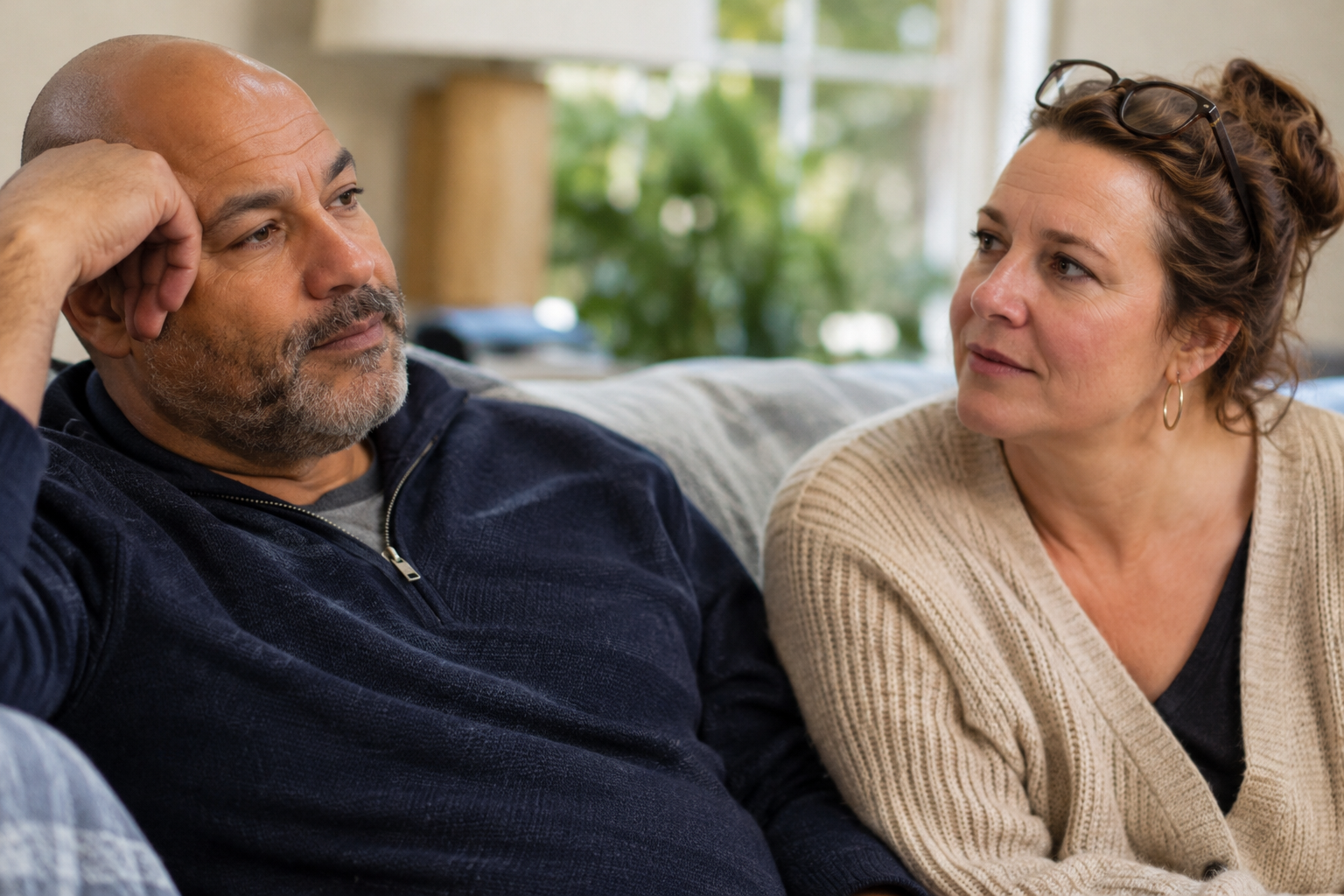
It’s one of the most common situations I see in couples therapy: One person is desperate to get help, and the other is coming reluctantly.
Maybe your partner has agreed to come, but they’ve already warned you: “I don’t think this is going to work.”
Or maybe they think the two of you should be able to figure this out on your own. "We don't need to pay someone to tell us to stop fighting." They don’t want to sit in a room talking about feelings with a stranger. They’re worried the therapist will take sides, make one person the bad guy, or just make things worse. Or they simply don’t want to spend the time and money on something they aren’t convinced will help.
So, is couples therapy still worth trying when only one of you is enthusiastic about it?
Often, yes.
In fact, both people don’t need to walk into the first session equally hopeful, equally motivated, or even equally convinced that the relationship can improve.
They just need to be willing to show up and see what's possible.
Why is my partner so reluctant?
Reluctance about couples therapy doesn’t necessarily mean someone doesn’t care about the relationship. There can be very understandable reasons for not wanting to go.
“Therapy isn’t going to work.”
If you’ve been having the same arguments for months or years, it can be difficult to imagine that talking about them in front a therapist is going to help. Sometimes the reluctant partner has already decided that therapy will simply become one more place to have the same argument.
“I’m going to get blamed.”
This is a big one.
If your partner believes you’re the one pushing for therapy, they may assume the therapist is going to become your ally. Suddenly it’s two against one, with a professional explaining all the things they’re doing wrong.
No wonder they don’t want to go.
Good couples therapy shouldn’t work that way.
A skilled couples therapist is looking at the relationship, and isn't searching for the identified patient. Each person has a role in the patterns that have developed between them, and both partners usually have something they can do differently.
“I don’t want to talk about my feelings with a stranger.”
For some people, vulnerability feels deeply uncomfortable.
They may have spent much of their lives learning to solve problems, push through difficult emotions, or keep certain things to themselves. Sitting across from their partner and saying what hurts, what scares them, or what they need can feel incredibly exposed.
But vulnerability is also something we can learn to tolerate when it happens in a setting that feels safe and productive.
You don’t have to walk into therapy knowing how to do it. Helping you have those conversations is part of the therapist’s job.
“We should be able to figure this out ourselves.”
Maybe you should.
And you’ve probably tried.
Most couples who come to therapy aren’t coming because they haven’t talked about their problems. They’re coming because they’ve talked about them many times and keep ending up in roughly the same place.
That’s where having a trained third person in the room can make a difference.
What can a therapist see that we can't?
When you’re inside a relationship, it can be remarkably difficult to see the pattern you’re caught in.
You see the argument about the dishes, sex, money, parenting, in-laws, or how much time someone spends on their phone.
I’m listening to the argument, but I’m also watching what happens between you.
Who reaches and who pulls away? Who gets louder when they don’t feel heard? Who shuts down when things become intense? What does one partner do that unintentionally triggers the other and what happens next?
Often, the problem isn’t simply what couples are arguing about. It’s the predictable sequence they fall into while trying to solve it.
Once we can see that pattern clearly, we can start changing it.
That is very different from sitting at the kitchen table and promising each other, once again, that next time you’ll communicate better.
You don't have to commit to therapy forever
If you’re the reluctant partner, I often think there’s a much more reasonable way to approach couples therapy than deciding in advance whether you “believe in” it.
Give it a fair trial.
Come to a few sessions. Participate. Be honest about your skepticism. See whether the therapist understands both of you and whether the conversations in the room feel different from the conversations you’ve been having at home.
You might be surprised.
Many reluctant partners begin to see the benefit once they realize therapy isn’t about assigning blame or endlessly dissecting the past. It’s about understanding what isn’t working between you and learning how to do something different.
And if you genuinely don’t find it helpful?
You can stop.
There’s no contract that says you have to keep coming.
But if your relationship matters to you, a few uncomfortable hours may be worth the possibility that something you’ve been unable to change on your own could actually begin to shift.
You don’t have to be convinced couples therapy will work.
You just have to be willing to find out.